Retro typography transforms simple words into bold visual statements that define entire room aesthetics. From bubble letters and psychedelic scripts to Art Deco elegance and mid-century modernist fonts, vintage lettering styles bring personality, color, and narrative power to wall art. This guide explores how to select, style, and display colorful retro typography in your home, creating spaces that communicate both aesthetic appeal and meaningful messages.
Related: Ultimate Guide to Retro & Vintage Wall Art Styles
Understanding Retro Typography Styles
1960s Geometric and Modernist Fonts
Sixties typography featured clean, geometric letterforms with precise angles and mathematical proportions reflecting the era’s space-age optimism and modernist design philosophy. Bold sans-serif fonts like Helvetica gained prominence, while custom display typefaces incorporated optical illusions and abstract shapes. These structured designs work beautifully in contemporary minimalist spaces seeking vintage character without visual chaos.
[shared_files file_upload=1 hide_file_list=1]
1970s Bubble and Rounded Letters
The 1970s introduced softer, inflated letterforms with thick outlines, dimensional shadows, and wavy baselines that contrasted sharply with previous decades’ angular precision. Bubble fonts communicated playfulness, freedom, and anti-establishment attitudes central to the decade’s cultural values. Modern interpretations maintain authentic roundness while sometimes refining proportions for contemporary aesthetics.
Art Deco and Jazz Age Typography
Art Deco fonts from the 1920s-1930s feature elegant, elongated letterforms with geometric embellishments, sharp angles, and luxurious metallic associations. These sophisticated designs incorporate vertical emphasis, stepped patterns, and decorative flourishes that evoke glamour and opulence. Art Deco typography works particularly well in formal spaces like dining rooms and home offices seeking refined vintage character.
Choosing Colors for Retro Typography Art
Classic Retro Color Combinations
Authentic retro typography pairs vibrant primaries—red, yellow, blue—with earthy tones like orange, mustard, avocado green, and burnt sienna reflecting specific decade aesthetics. High-contrast combinations (hot pink with orange, purple with yellow) create eye-catching drama typical of 1970s design. Balance bold color choices with neutral backgrounds (white, cream, tan) to ensure text remains readable while maintaining visual impact.
Monochromatic and Two-Tone Approaches
Single-color typography in bold hues against neutral backgrounds offers sophisticated alternatives to multicolor designs while maintaining retro character. Black text with colored shadows, outlines, or dimensional effects provides vintage styling with contemporary restraint. Two-tone combinations—such as cream letters on burnt orange backgrounds—evoke specific eras without overwhelming modern minimalist spaces.
Gradient and Ombre Effects
Color gradients within letterforms create dynamic, psychedelic effects characteristic of 1960s-70s poster art and concert graphics. Smooth transitions from warm to cool tones (orange to purple, yellow to pink) add movement and depth to static text. Modern digital design tools make gradient typography accessible for DIY projects while professional printables offer expertly crafted color progressions.
Popular Text-Based Wall Art Themes
Motivational and Inspirational Quotes
Positive affirmations and motivational phrases (“Good Vibes Only,” “Choose Joy,” “Dream Big”) rendered in retro typography create uplifting focal points for living areas and bedrooms. Select messages that feel personally meaningful rather than generic Pinterest clichés to ensure authentic connection. Vintage-style lettering elevates simple phrases into artistic statements that balance decoration with inspiration.
Custom Names and Family Words
Personalized typography featuring family names, children’s names, or meaningful dates creates unique wall art unavailable in mass market offerings. Retro fonts transform basic personalization into stylish décor that celebrates individual identity and family history. Consider custom commissions from graphic designers specializing in vintage lettering for truly one-of-a-kind pieces.
Song Lyrics and Literary Quotes
Favorite song lyrics, book passages, or poetry excerpts set in retro typography blend literary appreciation with visual design. Choose shorter excerpts (1-3 lines maximum) that remain readable and impactful rather than lengthy paragraphs that become overwhelming. Verify copyright permissions for commercial lyrics and published texts, though personal use typically falls under fair use guidelines.
Typography Placement by Room
Living Room Statement Walls
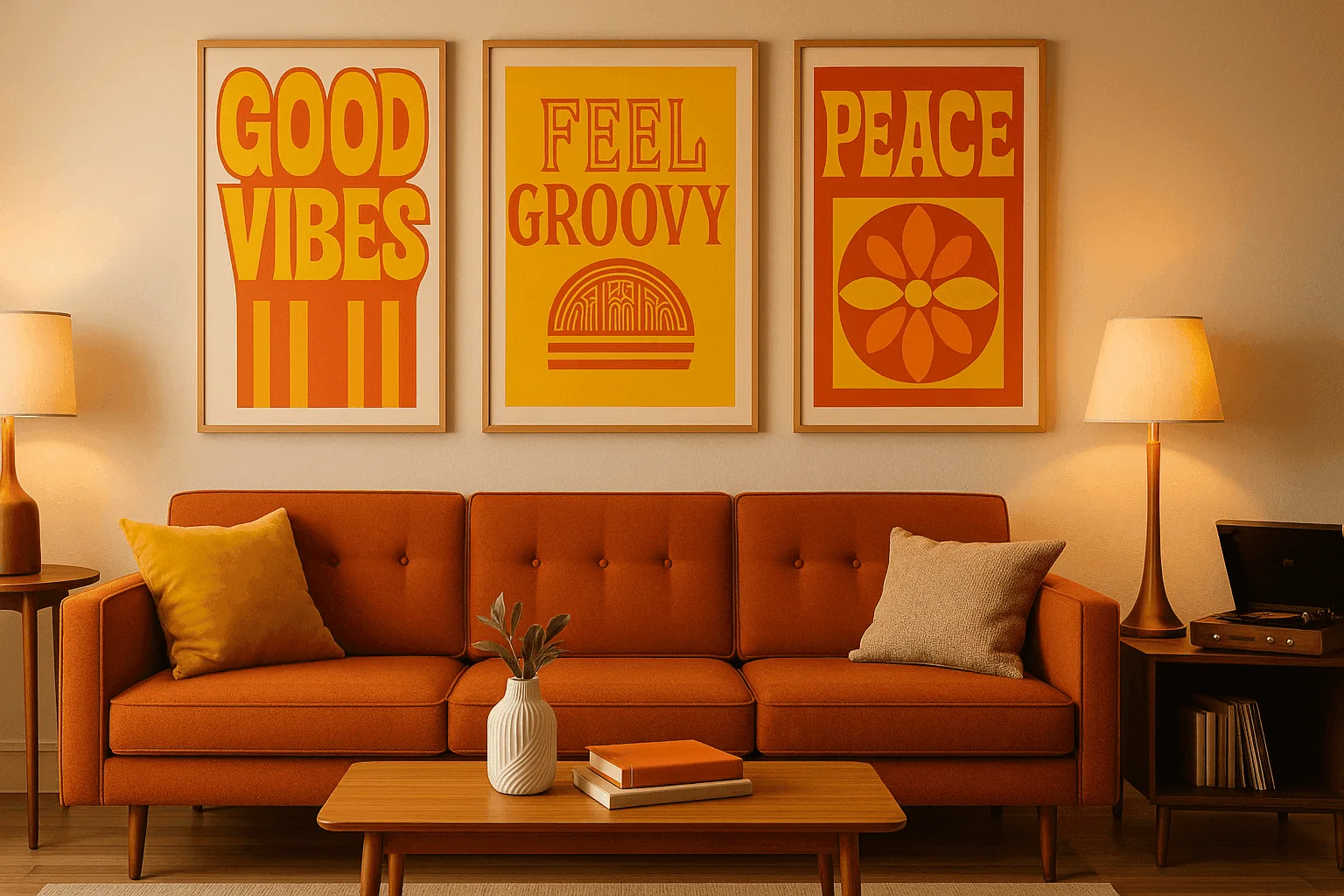
Large-scale retro typography posters (24×36 inches or larger) create dramatic focal points above sofas, serving as conversation starters and room-defining elements. Bold, readable phrases work best in high-traffic social spaces where guests can quickly appreciate text without close examination. Balance oversized lettering with minimal surrounding décor to prevent visual competition.
Kitchen and Dining Typography
Food-related phrases, coffee quotes, or dining room sentiments rendered in vintage fonts add personality to culinary spaces. Smaller 11×14 to 16×20 inch prints suit kitchen walls where cabinet and appliance placement limits available space. Choose moisture-resistant frames and position prints away from steam sources to preserve longevity.
Bedroom and Personal Spaces
Calming phrases in softer retro fonts create restful bedroom atmospheres that balance nostalgic style with peaceful energy. Position typography art where it’s visible from the bed but doesn’t dominate the space—above dressers or on walls perpendicular to sleeping areas. Select messages promoting relaxation, gratitude, or dreams rather than energizing, action-oriented text.
Creating DIY Retro Typography Art
Using Free Design Software
Canva, GIMP, and other free design platforms offer extensive libraries of retro-inspired fonts and templates for creating custom typography posters. Search for specific decade descriptors (“70s bubble font,” “Art Deco typeface”) to narrow extensive font selections. Experiment with letter spacing, line height, and alignment to achieve authentic vintage layouts that feel intentionally designed rather than randomly arranged.
Font Pairing and Hierarchy
Successful retro typography designs often combine 2-3 complementary fonts creating visual hierarchy and interest. Pair bold display fonts for primary words with simpler sans-serif or script fonts for secondary text, maintaining readability while adding complexity. Ensure fonts share similar eras or aesthetic qualities—mixing 1920s Art Deco with 1970s bubble letters typically creates confused rather than eclectic results.
Adding Decorative Elements
Enhance text-based designs with period-appropriate decorative elements—starbursts, flowers, geometric shapes, or ornamental borders—that reinforce vintage character without overwhelming typography. Position embellishments strategically to balance compositions and fill negative space while maintaining clear text readability. Limit decorations to 20-30% of total design area, allowing typography to remain the focal point.
Vintage Font Resources
Free Font Websites
DaFont, Font Squirrel, and Google Fonts host thousands of free retro-inspired typefaces sorted by decade, style, and licensing terms. Search categories like “vintage,” “retro,” “70s,” or “Art Deco” to discover era-specific options. Always verify licensing—many free fonts permit personal use but require paid licenses for commercial applications or digital product creation.
Premium Typography Collections
Creative Market, MyFonts, and FontSpring offer professional-quality vintage typefaces ($15-$50 typically) with expanded character sets, multiple weights, and commercial licensing. Premium fonts often include design resources like texture overlays, color palettes, and template files that streamline professional-looking poster creation. Investment in quality fonts pays dividends if creating multiple typography projects or selling designs.
Period-Authentic Typefaces
For historically accurate reproductions, seek fonts digitized from original vintage sources rather than modern interpretations. Websites like P22 Type Foundry and House Industries specialize in authentic period typography based on historical specimens. These fonts work particularly well for serious vintage enthusiasts seeking museum-quality accuracy in their wall art.
Styling Typography with Decor
Coordinating Frame Choices
Black frames create high-contrast drama around colorful retro typography, making vibrant letters pop against neutral walls. Natural wood frames soften bold text while maintaining vintage warmth appropriate to mid-century and 70s aesthetics. White or cream frames suit lighter, pastel-based typography and spaces seeking airy, Scandinavian-meets-retro hybrid styles.
Gallery Walls with Mixed Typography
Combine multiple typography posters in coordinated color schemes and complementary font styles to create dynamic gallery walls. Vary text lengths, sizes, and orientations while maintaining consistent framing and 2-3 inch spacing between pieces. Limit gallery walls to single color families (all warm tones or all cool tones) to prevent overwhelming visual chaos.
Mixing Typography with Image-Based Art
Balance text-heavy typography posters with complementary image-based prints—geometric patterns, botanical illustrations, or abstract designs—to create varied gallery walls. Ensure all pieces share common elements like color palettes, era references, or framing styles that unify disparate subjects. Use typography as focal anchor pieces with supporting image prints creating visual rhythm.
Typography Scale and Proportion
Readability at Distance
Typography wall art should remain readable from typical viewing distances—6-10 feet for living room pieces, 3-5 feet for bedroom art. Test font sizes by viewing designs on-screen from appropriate distances before printing, or create test prints on standard paper. As general guidance, minimum letter heights of 1-2 inches work for medium-distance viewing, while larger spaces benefit from 3-4 inch letters.
Negative Space and Breathing Room
Effective typography design incorporates generous negative space around letters, preventing cramped, overwhelming compositions. Leave margins of at least 10-15% around text edges within the overall print area, more for busy decorative fonts. White or neutral negative space allows eyes to rest and text to breathe, particularly important with bold retro fonts already commanding strong visual presence.
Vertical vs. Horizontal Orientations
Vertical typography suits narrow wall spaces, doorways, and areas flanking windows or furniture. Horizontal orientations work above sofas, beds, and in wide hallway stretches. Square formats offer versatility for various placements while providing balanced compositions. Match text orientation to natural reading flow—avoid forcing readers to tilt heads uncomfortably to read vertical arrangements.
Printing Typography Posters
Resolution Requirements for Text
Sharp, crisp typography demands higher resolution standards than photographic images—minimum 300 DPI at final print dimensions ensures clean letter edges without pixelation. Vector-based designs (created in Adobe Illustrator or similar) scale infinitely without quality loss, ideal for typography projects requiring multiple size options. Convert vector files to high-resolution raster formats (PNG, TIFF) when using print services that don’t accept vector uploads.
Paper Selection for Typography
Matte paper enhances typography readability by eliminating glare and reflection that can obscure text, particularly important in bright rooms. Glossy papers suit bold, colorful designs where vibrant hue reproduction outweighs glare concerns. Textured fine art papers add sophisticated, handcrafted character to Art Deco and vintage-inspired typography while potentially softening ultra-crisp letter edges.
Professional vs. Home Printing
Home printing suffices for small to medium typography posters (up to 11×17 inches) using quality inkjet printers and photo paper. Professional services excel for larger formats, specialty papers, and projects requiring perfect color accuracy and commercial-grade durability. Typography’s relatively simple graphic nature (compared to complex photography) makes it well-suited to home printing experimentation and cost savings.
Typography Trends for 2025
Retro-Futurism Typography
Contemporary designers blend 1960s space-age fonts with modern digital aesthetics, creating retro-futuristic typography that references past while feeling forward-looking. Metallic effects, neon glows, and geometric precision characterize this emerging trend. These designs appeal to tech-savvy vintage enthusiasts seeking fresh interpretations of classic styles.
Maximalist Layered Text
Counter to minimalist trends, maximalist typography layers multiple text elements, colors, and decorative flourishes creating complex, visually dense compositions. This approach draws from 1970s psychedelic poster tradition while incorporating contemporary color theory and digital capabilities. Works best as single statement pieces rather than within busy gallery wall arrangements.
Sustainable and Handcrafted Aesthetics
Hand-lettered typography emphasizing imperfect, organic qualities appeals to consumers valuing authenticity and sustainability over machine-perfect precision. Watercolor lettering, brush script, and textured backgrounds add warmth and humanity to retro-inspired designs. This trend bridges vintage nostalgia with contemporary values around craftsmanship and environmental consciousness.
Frequently Asked Questions About Retro Typography
What fonts are best for retro typography wall art?
Popular retro fonts include Cooper Black and Groovy for 1970s bubble letters, Futura and Helvetica for 1960s modernist designs, and Broadway or Metropolis for Art Deco aesthetics. Free options like Pacifico, Lobster, and Bebas Neue offer vintage character for personal projects, while premium fonts like P22 Cezanne or House Industries’ designs provide historically accurate period typography.
[shared_files file_upload=1 hide_file_list=1]
How do I choose colors for retro typography posters?
Select colors reflecting specific decades—mustard yellow, burnt orange, and avocado green for 1970s, bold primaries for 1960s, or metallic gold and deep jewel tones for Art Deco. Ensure high contrast between text and background for readability, particularly important from viewing distances. Pull 2-3 colors from existing room decor to create cohesive integration rather than jarring mismatch.
Can I mix different retro typography styles in one room?
Mixing typography styles works when united by consistent color palettes, similar framing, or complementary size scales. Combine no more than 2-3 distinct font styles per room to prevent visual confusion. Pair bold display fonts with simpler supporting typefaces rather than competing decorative styles, and maintain consistent era references within individual gallery walls.
What size should retro typography wall art be?
Living room statement pieces work best at 24×36 inches or larger, ensuring readability from typical seating distances of 8-12 feet. Bedroom and hallway typography suits 16×20 to 18×24 inch formats for closer viewing ranges. Kitchen art works well at 11×14 inches fitting compact wall spaces. Ensure letter heights measure at least 1-2 inches for medium-distance legibility.
Where can I find retro typography printables?
Etsy offers thousands of retro typography digital downloads from independent designers ($4-$15 typically), searchable by decade, color, or specific phrases. Creative Market provides professional-grade templates and pre-designed posters with commercial licensing options. Free resources exist through design blogs and Pinterest, though verify licensing terms before printing and displaying.