
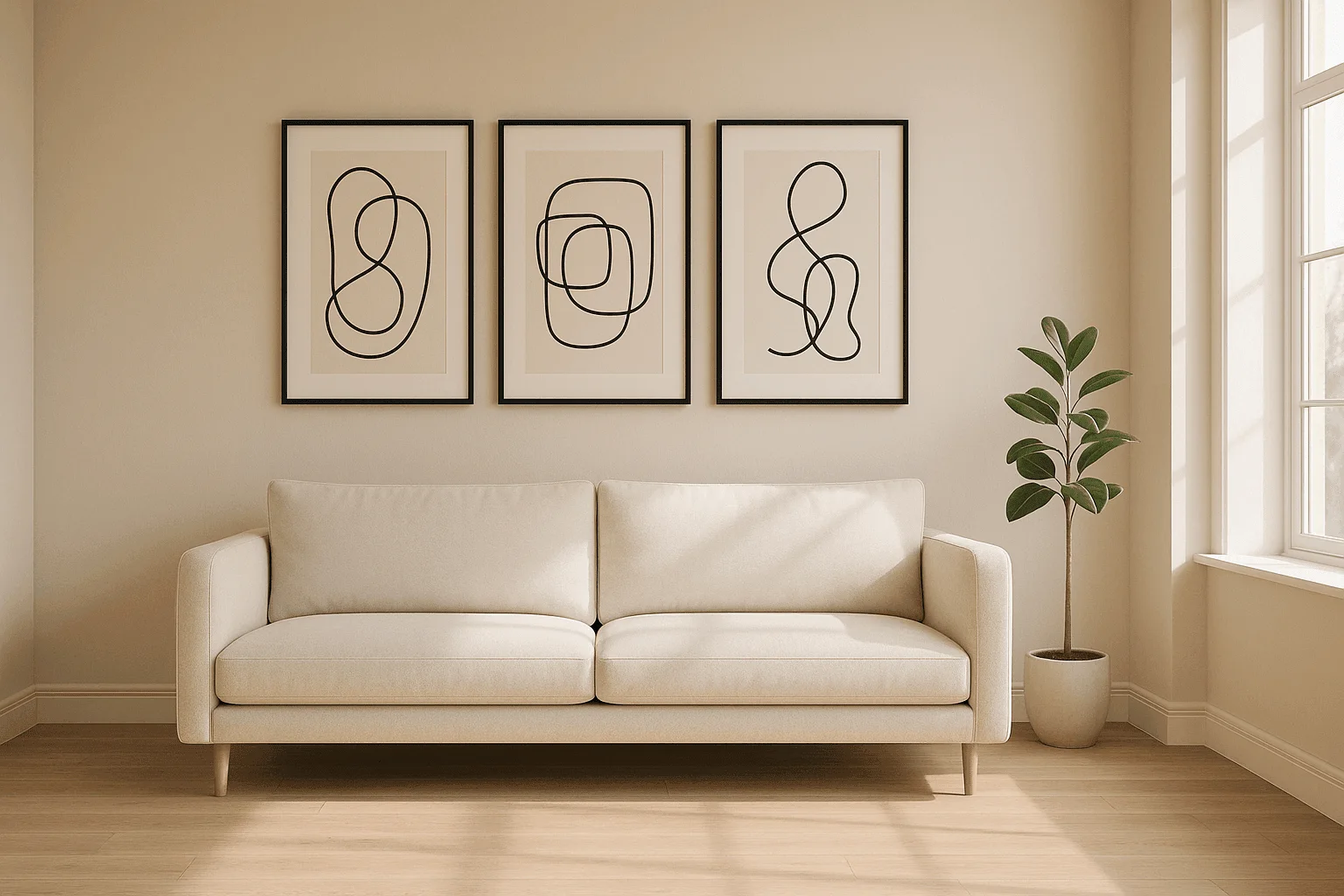
Modern minimalist wall art embraces the principle that less truly is more, stripping away unnecessary elements to reveal essential beauty in form, line, and negative space. This design philosophy creates calm, uncluttered environments that prioritize quality over quantity and intentional curation over abundant decoration. This comprehensive guide explores minimalist art principles, helping you select coordinated print sets, create balanced gallery walls, and style contemporary spaces that feel both sophisticated and serene.
Related: Ultimate Guide to Retro & Vintage Wall Art Styles
Understanding Minimalist Art Principles
The Philosophy of Less is More
Minimalist art emerged in the 1960s as a reaction against abstract expressionism’s emotional intensity and decorative excess, emphasizing pure form, geometric precision, and reduction to essential elements. Contemporary minimalist wall art applies these principles to home decor through clean lines, limited color palettes, and generous negative space that creates breathing room in busy modern lives. This approach values quality, craftsmanship, and intentional selection over accumulation and visual noise.
Key Characteristics of Minimalist Design
Successful minimalist art features deliberate restraint in color (typically 1-3 hues maximum), simplified shapes stripped to geometric basics, and balanced compositions where negative space functions as actively as marked elements. Precision and clarity replace decoration and embellishment, with every line, shape, and color serving specific compositional purposes. The aesthetic celebrates materials’ inherent qualities rather than masking them with excessive treatment or ornamentation.
Negative Space as Design Element
Negative space—unmarked areas surrounding and between design elements—functions as crucial compositional component in minimalist art rather than empty background. This intentional emptiness provides visual rest, directs attention to marked elements, and creates breathing room that prevents overwhelming viewers. Effective minimalist prints often feature 50-70% negative space, allowing simple subjects to command attention through isolation rather than competition.
Popular Minimalist Art Styles
Abstract Line Art
Single-line or sparse multi-line drawings create minimalist representations of faces, bodies, botanicals, and abstract forms with elegant economy. These continuous line illustrations capture essence with minimal marks, often rendered in black ink on white backgrounds for maximum contrast and clarity. The style’s sophisticated simplicity suits contemporary spaces seeking artistic character without visual complexity, making it among the most popular minimalist approaches in 2025.
Geometric Abstract Prints
Pure geometric forms—circles, squares, triangles, lines—arranged in balanced compositions create minimalist abstract art emphasizing mathematical precision and spatial relationships. These designs explore color interaction, proportion, and negative space through deliberately limited elements that reward sustained viewing. Geometric minimalism works particularly well in modern, Scandinavian, and mid-century inspired interiors sharing similar design DNA.
Scandinavian-Inspired Nature Prints
Nordic minimalism interprets natural subjects—mountains, forests, botanical elements—through simplified forms, muted color palettes, and generous white space reflecting Scandinavian design values. These prints balance minimalist restraint with organic warmth, creating accessible entry points for those intimidating by stark geometric abstraction. Soft grays, dusty blues, and warm beiges dominate palettes that evoke natural materials and landscapes.
Choosing Minimalist Art Print Sets
Benefits of Coordinated Collections
Pre-curated minimalist print sets ensure visual cohesion through shared color palettes, complementary compositions, and unified artistic approaches that eliminate guesswork in creating harmonious displays. Sets typically include 2-6 pieces designed to work individually or collectively, providing flexibility for various wall sizes and arrangement preferences. Digital download sets offer particularly strong value, providing multiple coordinated designs at lower cost than individual purchases.
Set of 2: Symmetrical Balance
Two-print sets create perfectly balanced symmetrical arrangements ideal for flanking beds, sofas, mantels, or architectural features. Matching or complementary pairs establish visual rhythm through repetition while maintaining minimalist restraint that prevents overwhelming spaces. Choose prints with similar compositions but varying subjects—two different abstract line drawings, two complementary geometric patterns—to create unity with subtle variety.
Set of 3: Dynamic Triptychs
Three-print sets offer versatility for horizontal linear displays above furniture, vertical column arrangements in narrow spaces, or triangular compositions creating dynamic visual interest. Triptych arrangements work especially well with progressive designs where compositions relate sequentially—color gradients, scale variations, or thematic progressions. Odd-numbered groupings feel more organic and less formal than even numbers, aligning with minimalist values.
Larger Sets: Curated Gallery Walls
Four to six-print sets accommodate expansive gallery walls while maintaining minimalist cohesion through coordinated design elements. These larger collections allow more complex arrangements—grid layouts, asymmetrical clusters, scattered placements—while shared aesthetics prevent visual chaos. Vary print sizes within sets to create hierarchy and movement, positioning largest pieces as focal anchors with smaller prints providing support.
Minimalist Color Palettes
Monochromatic Black and White
Classic black-on-white or white-on-black minimalist prints offer timeless sophistication through maximum contrast and zero chromatic complexity. This approach eliminates color decision-making entirely, focusing attention on form, composition, and negative space relationships. Black and white prints integrate seamlessly with any existing color scheme, making them ideal for renters or frequent redecorators seeking versatile artwork.
Warm Minimalism: Neutrals and Earth Tones
The 2025 “warm minimalism” trend softens stark black-white aesthetics through gentle neutrals—cream, beige, warm gray, soft taupe—and muted earth tones creating approachable, human-scaled spaces. These softer palettes maintain minimalist restraint while adding warmth that prevents cold, institutional feelings sometimes associated with extreme minimalism. Warm minimalist prints suit living areas, bedrooms, and family spaces requiring comfort alongside sophistication.
Cool Minimalism: Grays and Blues
Cool-toned minimalist palettes using various grays, soft blues, and icy whites create calm, contemplative atmospheres ideal for bedrooms, bathrooms, and meditation spaces. These colors recede visually, making rooms feel more spacious while promoting psychological calm and clarity. Cool minimalism works particularly well in naturally bright spaces where warm tones might feel overwhelming or in south-facing rooms with abundant warm sunlight.
Accent Color Strategy
Strategic single-color accents—soft sage, dusty rose, muted terracotta—add personality to primarily neutral minimalist prints without abandoning restrained principles. Use accent colors in 10-20% of overall composition, allowing neutrals to dominate while introducing subtle warmth or visual interest. This approach bridges pure minimalism with personal expression, preventing spaces from feeling generic or impersonal.
Creating Minimalist Gallery Walls
Grid Layouts for Order
Precise grid arrangements with equal spacing and aligned edges create ordered, architectural gallery walls that reinforce minimalist values of precision and restraint. Calculate exact spacing (typically 2-3 inches between frames) and use levels, measuring tape, and templates ensuring perfect alignment. Grid layouts work best with identically sized prints in matching frames, creating unified visual fields rather than individual competing pieces.
Asymmetrical Balance
Thoughtfully asymmetrical arrangements balance visual weight without strict symmetry, creating dynamic compositions that feel organic yet intentional. Position larger prints off-center as anchors, building smaller pieces around them while maintaining overall compositional equilibrium. This approach requires more planning than grids but yields sophisticated results that avoid formulaic predictability.
Linear Horizontal Arrangements
Horizontally aligned prints create strong visual lines particularly effective above sofas, beds, or console tables where they reinforce furniture geometry. Maintain consistent bottom or center alignment while varying print sizes to create rhythm and prevent monotony. Three to five prints typically work best for horizontal arrangements, providing sufficient presence without overwhelming wall space.
Strategic Spacing and Breathing Room
Minimalist gallery walls require generous spacing between prints—typically 3-4 inches rather than crowded 1-2 inch gaps—allowing each piece breathing room and preventing visual clutter. Leave substantial margins (minimum 6-8 inches) between gallery wall edges and adjacent walls, ceilings, or furniture to maintain compositional clarity. This spaciousness distinguishes minimalist curation from maximalist abundance.
Framing Minimalist Art
Simple Black Frames
Thin-profile black frames (0.5-0.75 inches wide) create clean boundaries around minimalist prints without competing for attention, particularly effective with black-and-white or monochromatic artwork. The high contrast between black frames and white walls emphasizes artwork as distinct objects while maintaining overall simplicity. Black frames work universally across minimalist, Scandinavian, modern, and contemporary design styles.
Natural Wood Frames
Light oak, ash, or birch frames introduce warm organic texture that softens minimalist aesthetics while maintaining clean lines and simple profiles. Wood frames particularly suit Scandinavian-inspired prints and warm minimalist approaches seeking approachable rather than austere character. Choose frames with visible grain patterns celebrating natural material qualities rather than heavily stained or painted finishes masking wood’s inherent beauty.
White and Neutral Frames
White or cream frames create seamless integration between artwork and walls, particularly effective in bright, airy spaces seeking maximal lightness. This approach makes prints feel like natural wall extensions rather than added objects, ideal for small spaces where visual weight matters. Neutral frames work beautifully with soft, muted artwork but may lack sufficient contrast for bold black-and-white prints.
Frameless and Float Mounting
Frameless presentations or float mounting (where prints appear suspended in front of backing boards) offer ultra-minimalist display methods eliminating frame elements entirely. These approaches work best with thick, substantial papers or mounted prints that maintain rigidity without frame support. Frameless displays create contemporary, gallery-like presentations suited to modern spaces embracing architectural simplicity.
Minimalist Art by Room
Living Room Statement Pieces
Large-scale minimalist prints (30×40 inches or larger) create dramatic focal points in living areas without visual chaos, commanding attention through size rather than complexity. Single oversized abstracts or line drawings above sofas provide sufficient presence to anchor rooms while maintaining uncluttered aesthetics. Alternatively, arrange 3-5 medium prints in clean horizontal lines for equivalent visual weight distributed across multiple pieces.
Bedroom Serenity
Minimalist bedroom art prioritizes calm, restful imagery—soft abstracts, simple landscapes, gentle line drawings—in muted palettes promoting relaxation rather than stimulation. Symmetrical pairs flanking beds create balanced, peaceful arrangements, while single centered prints offer meditative focal points. Limit bedroom art to 1-3 carefully chosen pieces maintaining serene, uncluttered sleeping environments.
Home Office Focus
Minimalist prints in home offices support concentration and productivity through undemanding visual simplicity that avoids distraction. Geometric abstracts, simple typography, or monochromatic designs maintain professional aesthetics while adding personality to work environments. Position artwork within peripheral vision rather than directly in sight lines, allowing occasional visual rest without constant attention demands.
Hallways and Transitional Spaces
Narrow hallways benefit from vertically oriented minimalist prints that draw eyes upward, making corridors feel more spacious and less confining. Create progressive sequences with 3-5 related prints—gradual color shifts, increasing abstraction, thematic progressions—that guide movement through transitional spaces. Smaller 11×14 or 16×20 prints suit compact hallway dimensions better than oversized pieces overwhelming limited space.
DIY Minimalist Art Ideas
Abstract Acrylic Techniques
Create simple abstract minimalist paintings using limited color palettes (2-3 hues maximum), broad brushstrokes, and generous negative space on canvas. Practice color blocking, gentle gradients, or geometric shapes using painter’s tape for crisp edges. Scan or photograph finished works at high resolution to create digital files for printing multiple copies or different sizes.
Digital Line Drawing Projects
Use free design software like Procreate, Adobe Fresco, or even simple vector programs to create continuous line drawings of faces, bodies, or abstract forms. Start with photographic references, gradually reducing detail until only essential lines remain capturing subject essence. Export as high-resolution files (300 DPI minimum) suitable for printing at various scales.
Minimalist Photography
Capture minimalist photographs emphasizing negative space, simple subjects isolated against clean backgrounds, and subtle tonal variations. Look for architectural details, natural forms, or everyday objects that reveal hidden beauty through minimalist framing. Convert to black-and-white or apply subtle color grading maintaining restrained palettes, then print at poster sizes for instant minimalist wall art.
Where to Find Minimalist Prints
Digital Download Marketplaces
Etsy leads minimalist print offerings with thousands of independent artists selling downloadable line art, abstracts, and Scandinavian-inspired designs ($4-$15 typically). Search specifically for “minimalist print set,” “abstract line art,” or “Scandinavian wall art” to narrow results effectively. Creative Market and Design Bundles provide professional-grade collections with commercial licensing options for those creating content or products.
Print-on-Demand Services
Society6, Redbubble, and Desenio specialize in contemporary minimalist prints with professional printing, framing, and direct shipping included. These platforms handle production logistics but typically cost more than digital downloads with local printing. Compare options based on desired sizes, framing preferences, and budget constraints to determine optimal purchasing approach.
Museum and Gallery Shops
Museum shops (MoMA, Tate Modern, Guggenheim) offer high-quality reproductions of iconic minimalist works by recognized artists like Donald Judd, Agnes Martin, or Ellsworth Kelly. These pieces carry cultural cachet and art historical significance beyond generic mass-market prints. Prices reflect museum quality and artist licensing but provide authentic connections to minimalist art movement origins.
Minimalist Art Trends for 2025
Warm Minimalism Movement
The 2025 shift toward “warm minimalism” softens stark aesthetics through natural textures, gentle neutrals, and approachable compositions that feel human-scaled rather than institutional. This evolution maintains minimalist restraint while adding warmth preventing cold, unwelcoming spaces. Expect continued emphasis on earth tones, organic shapes, and tactile materials balancing precision with comfort.
Maximizing Negative Space
Contemporary minimalist artists push negative space to extreme proportions, creating compositions where 70-80% remains unmarked, forcing viewers to appreciate subtlety and restraint. This approach challenges conventional expectations about art requiring visual complexity, celebrating emptiness as powerful design element. Ultra-minimalist pieces work best in spacious, uncluttered environments where extreme simplicity feels intentional rather than incomplete.
Biophilic Minimalism
Combining minimalist aesthetics with biophilic design principles creates nature-inspired minimalist art featuring organic forms, natural color palettes, and botanical subjects rendered through simplified approaches. This trend responds to increasing desire for nature connection in urban environments while maintaining contemporary clean aesthetics. Expect subtle leaf forms, gentle landscape abstractions, and earth-toned palettes dominating this emerging category.
Frequently Asked Questions About Minimalist Wall Art
What defines minimalist wall art?
Minimalist wall art features clean lines, limited color palettes (typically 1-3 colors), generous negative space, and simplified forms stripped to essential elements. Compositions emphasize quality over quantity, precision over decoration, and intentional restraint over abundant detail. Common styles include abstract line drawings, geometric compositions, and simplified natural subjects rendered with minimal marks.
How many minimalist prints should I use in a room?
Minimalist principles favor fewer, carefully chosen pieces over abundant displays. Living rooms typically accommodate 1-3 statement prints or a coordinated set of 3-5 pieces in clean gallery wall arrangements. Bedrooms work best with 1-2 prints maintaining serene atmospheres. Follow the “less is more” philosophy—if uncertain whether to add another piece, the minimalist answer is usually to stop with fewer.
What colors work best for minimalist art?
Classic black and white offers timeless minimalist sophistication with maximum contrast. Warm minimalism uses soft neutrals including cream, beige, warm gray, and muted earth tones creating approachable spaces. Cool minimalism employs various grays, soft blues, and icy whites for calm, contemplative atmospheres. Limit palettes to 1-3 colors maximum, using accent hues sparingly (10-20% of composition) if adding any color to neutral foundations.
Can minimalist art work with other decor styles?
Minimalist art integrates beautifully with Scandinavian, modern, contemporary, and even bohemian styles sharing appreciation for clean lines and restrained palettes. The key involves matching color temperatures and visual weight—pair warm minimalist prints with boho earth tones, or cool minimalist pieces with Scandinavian whites and grays. Minimalist art’s simplicity makes it remarkably versatile, functioning as visual rest amid busier decor elements.
Where should I hang minimalist wall art?
Hang minimalist art at standard eye level (57-60 inches center height from floor) with generous surrounding space preventing crowding. Leave minimum 6-8 inches between frame edges and adjacent walls, furniture, or other artwork. Minimalist pieces require breathing room to function effectively—cramped placement undermines the negative space and visual calm essential to minimalist aesthetics. Position in naturally lit areas where subtle details remain visible without harsh direct sunlight causing fading.