
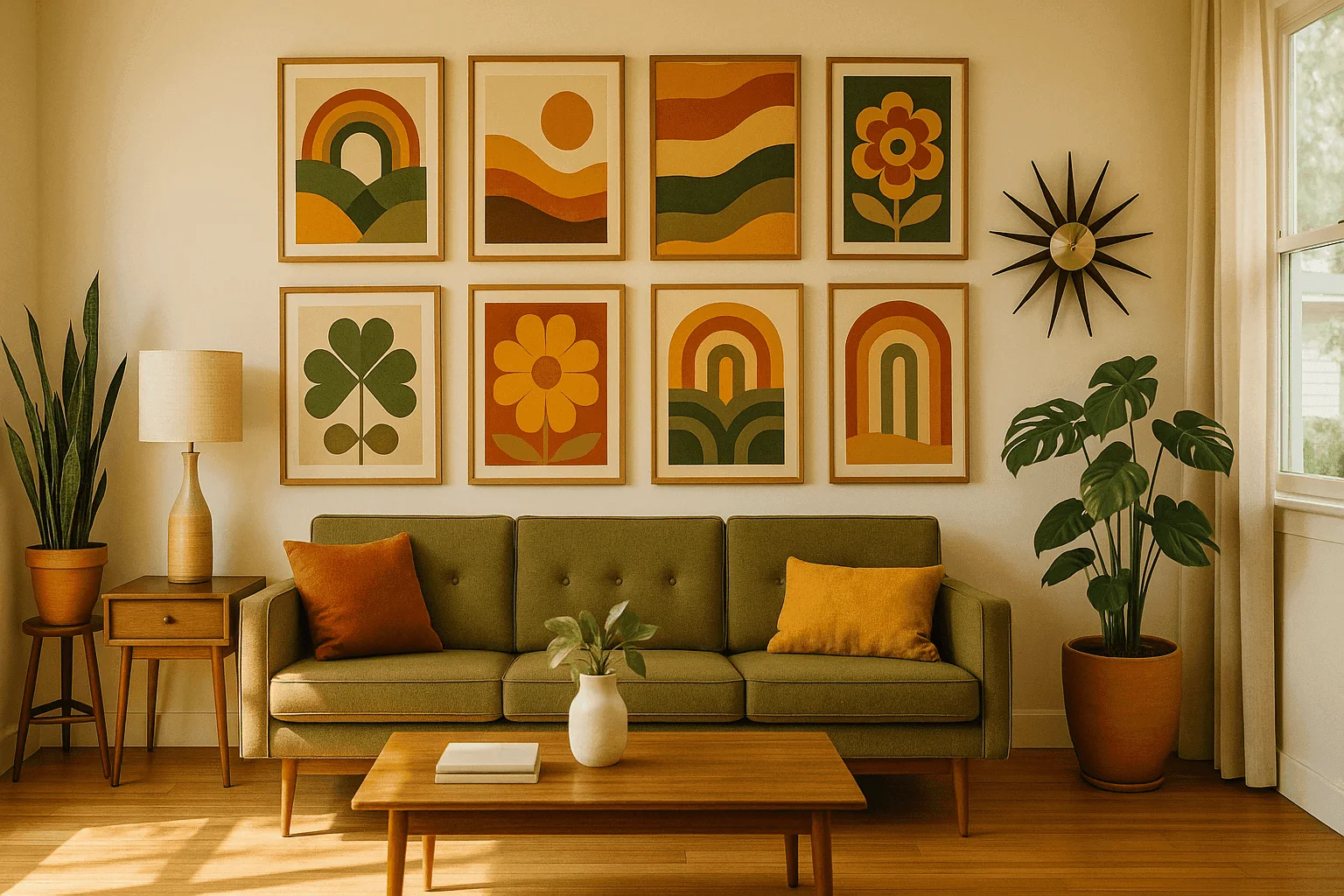
Retro wall art brings nostalgic charm and vibrant personality to modern homes. Whether you’re decorating a living room, kitchen, or bedroom, vintage-inspired prints create focal points that celebrate mid-century design aesthetics and groovy 70s vibes. This comprehensive guide explores how to select and style retro wall art for every room in your home, from bold geometric patterns to colorful typography that defines each space’s unique character.
Related: Ultimate Guide to Retro & Vintage Wall Art Styles
Retro Wall Art for Living Rooms
Best Styles for Living Room Spaces
Living rooms benefit from large-scale retro prints featuring bold geometric patterns, sunburst designs, and abstract shapes that dominated 1960s and 1970s interior design. Choose artwork measuring 24×36 inches or larger to create statement walls above sofas and entertainment centers. Mid-century modern prints in orange, mustard yellow, and avocado green complement contemporary furniture while maintaining authentic vintage appeal.
Color Palettes That Work
Successful retro living room art incorporates warm earth tones—burnt orange, golden yellow, chocolate brown, and olive green—that defined the era’s aesthetic. Pair these vintage hues with neutral walls to prevent overwhelming the space, or embrace maximalist design by layering multiple colorful prints in coordinating frames.
Layout and Arrangement Tips
Create gallery walls using 3-5 retro prints in varying sizes, maintaining 2-3 inches of spacing between frames for visual balance. Hang artwork at eye level (approximately 57-60 inches from floor to center) to ensure optimal viewing angles. For asymmetrical arrangements, balance larger prints with smaller complementary pieces to guide the eye naturally across the wall.
Retro Wall Art for Kitchens
Food and Beverage Themed Prints
Kitchen spaces thrive with retro advertising posters, vintage coffee prints, and colorful fruit illustrations that echo 1950s diner aesthetics. Look for prints featuring classic brand imagery, retro typography, and cheerful food graphics that add personality to cooking spaces. Popular themes include vintage cocktail recipes, retro diner signs, and mid-century kitchen appliance advertisements.
Sizing for Kitchen Spaces
Kitchens often have limited wall space due to cabinets and appliances, making 8×10 to 11×14 inch prints ideal for most layouts. Group smaller prints in sets of 2-4 above breakfast nooks or open shelving to create cohesive displays without overwhelming compact areas. Consider vertical arrangements in narrow spaces between windows or beside refrigerators.
Moisture-Resistant Display Options
Protect kitchen artwork from humidity and cooking splatter by using glass-front frames with sealed backs. Canvas prints treated with protective coatings offer moisture resistance while maintaining the casual, textured appeal of retro design. Position prints away from direct heat sources like stoves to preserve color vibrancy and prevent warping.
Retro Wall Art for Bedrooms
Creating Restful Retro Vibes
Bedroom retro art should balance nostalgic style with calming energy by selecting softer color palettes and gentler design motifs. Muted oranges, sage greens, and dusty pinks provide vintage character without the visual stimulation of brighter primary colors. Abstract patterns, peaceful landscapes, and groovy floral designs work particularly well in sleeping spaces.
Above-Bed Placement Strategies
Position a single large retro print (30×40 inches or bigger) centered above the headboard as a bedroom focal point. Alternatively, create symmetrical arrangements using two matching prints flanking the bed, maintaining balance and proportion. Leave 6-12 inches of space between the headboard top and artwork bottom to establish visual connection without crowding.
Mixing Retro with Modern Bedroom Decor
Blend retro wall art seamlessly with contemporary bedroom furniture by selecting prints that incorporate one or two accent colors already present in your bedding or curtains. This approach allows vintage artwork to feel intentional rather than randomly placed. Pair ornate vintage frames with streamlined modern nightstands to create eclectic yet cohesive room design.
Choosing Frames for Retro Wall Art
Frame Styles That Enhance Vintage Aesthetics
Wooden frames in natural oak, walnut, or painted finishes complement retro artwork by reinforcing mid-century design principles. Slim profile frames (0.75-1 inch wide) suit geometric and typographic prints, while chunkier frames (1.5-2 inches) ground larger abstract pieces. Gold and brass metal frames add authentic 1960s and 1970s glamour to groovy poster designs.
Mat Board Considerations
White or cream mat boards create breathing room around retro prints, particularly important for busy patterns or bold colors. Mat borders measuring 2-3 inches wide provide professional polish without overwhelming smaller artwork. Skip mats entirely for edge-to-edge impact with graphic typography and poster-style prints that benefit from borderless presentation.
Digital Downloads vs. Physical Prints
Benefits of Digital Retro Art Prints
Digital download retro wall art offers immediate access, unlimited printing options, and cost-effective decorating solutions. Purchase once and print multiple sizes for different rooms, or create coordinated sets by selecting complementary designs from the same artist or collection. Digital files eliminate shipping costs and delays, allowing same-day project completion through local or online print services.
Print Quality Specifications
Ensure digital retro art files feature 300 DPI resolution for crisp, professional results at standard poster sizes. Check that dimensions accommodate your target print size without pixelation—a 24×36 inch print requires minimum 7200×10800 pixel dimensions. Request RGB color mode files for digital printing, which reproduces the vibrant oranges, yellows, and reds essential to retro aesthetics.
Budget-Friendly Retro Wall Art Ideas
Printable Options Under $10
Digital download marketplaces offer thousands of retro and vintage-inspired designs ranging from $3-$10 per file. Print at home using high-quality photo paper for small to medium sizes, or use affordable online printing services for larger formats. Frame with budget-friendly options from discount retailers, thrift stores, or even DIY painted frames for personalized touches.
Creating Gallery Walls on a Budget
Build impressive retro gallery walls incrementally by starting with 2-3 key prints and adding pieces over time as budget allows. Mix expensive statement pieces with affordable digital downloads to achieve expensive-looking results at fraction of the cost. Thrift store frames can be updated with spray paint in coordinating colors to unify mismatched finds into cohesive collections.
Where to Buy Retro Wall Art
Online Marketplaces for Digital Downloads
Etsy, Creative Market, and specialty art print shops offer extensive collections of retro and vintage-inspired digital downloads. Search using specific decade descriptors (“70s wall art,” “mid-century prints”) combined with room locations for targeted results. Read seller reviews and examine preview images carefully to ensure style authenticity and print quality.
Print-on-Demand Services
Print-on-demand platforms provide professionally printed retro art with direct-to-door shipping, eliminating printing logistics. These services often offer framing options, various paper types, and size flexibility to accommodate different spaces and budgets. Compare pricing across multiple services, as costs vary significantly for identical print sizes.
Styling Tips for Cohesive Retro Rooms
Coordinating Art with Decor Elements
Select 2-3 dominant colors from your retro wall art and repeat them in throw pillows, rugs, or decorative accessories throughout the room. This color echoing creates intentional design flow that ties vintage artwork to contemporary furnishings. Balance busy, colorful prints with solid-colored furniture and vice versa to prevent visual overwhelm.
Lighting to Enhance Retro Artwork
Proper lighting transforms retro wall art from flat decoration to room-defining features. Install picture lights above large statement pieces or use adjustable track lighting to highlight gallery wall arrangements. Avoid direct sunlight exposure, which fades vibrant retro colors over time—UV-protective glass or window treatments preserve print longevity.
Frequently Asked Questions About Retro Wall Art
What size retro wall art works best for small rooms?
Small rooms benefit from 16×20 to 20×24 inch prints that provide visual interest without overwhelming limited wall space. Vertical orientations elongate walls in rooms with low ceilings, while horizontal prints widen narrow spaces. Avoid gallery walls with too many small pieces in compact rooms—opt for 1-2 larger prints instead for cleaner visual impact.
Can I mix different retro decades in one room?
Mixing 1960s, 70s, and 80s retro styles works when united by consistent color palette or framing approach. Choose artwork sharing similar color intensity levels—either all bright and saturated or all muted and vintage-washed—to maintain visual harmony. Keep furniture and accessories primarily aligned with one decade to prevent confused, overly eclectic aesthetics.
How do I print digital retro wall art at home?
Home printing requires inkjet or laser printers supporting larger paper sizes (minimum 11×17 inches) and photo-quality settings. Use heavyweight matte or glossy photo paper (minimum 32 lb weight) for professional-looking results with vibrant color reproduction. Adjust printer settings to “high quality” or “photo” modes and allow prints to dry completely (24 hours) before framing to prevent smudging.
What’s the difference between retro and vintage wall art?
Vintage wall art refers to authentic pieces created during specific historical periods (typically 20+ years old), while retro art mimics vintage styles through modern reproduction. Retro prints offer vintage aesthetics at lower price points with immediate digital availability, perfect for budget-conscious decorating. Original vintage posters command premium prices and may show authentic aging characteristics like color fading or paper yellowing.
How high should I hang retro wall art?
Hang artwork so its center point sits at 57-60 inches from the floor, the average human eye level. For art above furniture, leave 6-8 inches of space between furniture top and frame bottom to create visual connection without crowding. In rooms with high ceilings, raise artwork slightly (up to 65 inches center height) to maintain proportion and prevent pieces from appearing lost on expansive walls.